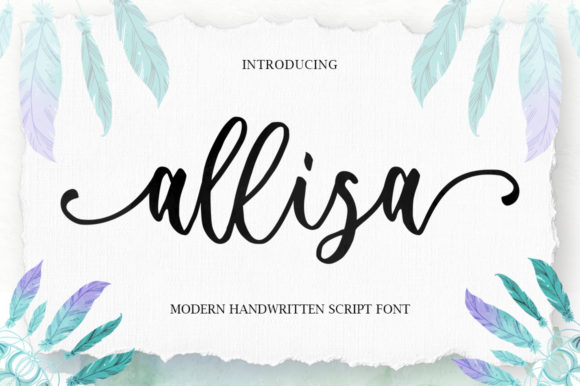
Allisa: The Elegant Script Font for Your Brand
I remember the exact moment I realized my business needed a visual overhaul. It was a rainy Tuesday, and I was sitting at my kitchen table surrounded by stacks of packaging materials for my new line of hand-poured soy candles. The scents were perfect, the wax quality was top-tier, but something felt off about the labels. They looked generic. The font I had chosen years ago from a free download site felt cheap against the premium glass jars. It didn't scream "luxury" or "handcrafted care." It just screamed "template."
As a small business owner, you quickly learn that your brand identity is more than just a logo; it is the feeling a customer gets before they even touch your product. Typography plays a massive role in this. That afternoon, I decided to invest in a proper premium font that could carry the weight of my brand's story. That search led me to Allisa, a script typeface that completely transformed how I present my work to the world.
Why Allisa Stands Out in the World of Script Fonts
When you are browsing through hundreds of Fonts, it is easy to get overwhelmed. Many script fonts feel too old-fashioned, looking like they belong on a Victorian wedding invitation rather than a modern boutique label. Others are so trendy that they will look dated in six months. Allisa strikes a perfect balance. It simplifies elegance into one truly outstanding script font.
Allisa maintains its classy calligraphic influences while feeling contemporary and fresh. When I first applied it to a mock-up of my candle jar, the difference was immediate. The strokes flowed naturally, mimicking the grace of a handwritten signature without sacrificing legibility. It felt personal, as if each label was written by hand with care, yet consistent enough to be printed on thousands of units. This versatility is exactly what appeals to a wide range of creators, from bakery owners to digital marketers.
Transforming Packaging and Product Labels
The most visible impact of switching to Allisa was on my packaging design. For a small business, your product label is often the first physical interaction a customer has with your brand. I used Allisa for the main product name on my candle jars. Because it is a display font designed for headlines and short phrases, it commanded attention without overwhelming the minimalist aesthetic of the jar.
If you run a bakery, imagine using Allisa on a custom pastry box. The fluid curves suggest softness and sweetness, perfectly complementing images of croissants or cupcakes. For a skincare brand, the same font on a serum bottle communicates purity and gentle luxury. The key is understanding that Allisa shines when used for titles, logos, and decorative accents. It is not meant for long paragraphs of text. By reserving it for the most important words, you create a hierarchy that guides the customer's eye and elevates the perceived value of the item.
Building a Consistent Brand Identity Across Channels
One of the biggest challenges for entrepreneurs is maintaining visual consistency across different platforms. You want your Instagram feed to look as polished as your business cards, and your website banners to match your social media graphics. Before finding Allisa, my brand looked fragmented. My menu used one font, my thank-you cards another, and my website headers a third.
Implementing Allisa as my primary script font brought everything together. I updated my café-style menu boards (even though I sell candles, I host tasting events) to feature the brand name in Allisa. I redesigned my social media templates so that every post header used the same elegant typography. Suddenly, my brand felt cohesive. Customers started recognizing the style instantly. When they saw a post on their feed, they knew it was from me because of the distinctive letterforms.
This consistency builds trust. In the crowded marketplace of online shops and handmade sellers, a recognizable brand identity makes you memorable. It signals professionalism. When a customer sees a well-designed logo or a beautifully typeset flyer, they subconsciously assume the product inside is of high quality. Typography affects first impressions more than we often realize.
Practical Tips for Using Allisa in Your Designs
To get the most out of Allisa, it helps to understand where it works best. As a Script Amp category font, it is powerful but needs space to breathe. Here are a few practical tips I learned during my redesign process:
- Stick to Headlines and Logos: Use Allisa for your business name, product titles, and key marketing slogans. Avoid using it for body text or legal disclaimers, as script fonts can become difficult to read in long blocks.
- Check Readability on Small Screens: If you are designing mobile ads or social media thumbnails, ensure the size of the font is large enough to be legible on a phone screen. Sometimes, less is more.
- Leverage Alternates and Ligatures: One of the features I love about Allisa is the inclusion of alternates and ligatures. These special characters allow you to customize the look of specific letters, adding a unique flair to your logo design that sets you apart from competitors using standard scripts.
- Consider Print vs. Digital: While Allisa looks stunning on screens, it also prints beautifully. Whether you are printing stickers, business cards, or merchandise, the crisp lines hold up well in both color and black-and-white formats.
Mastering Font Pairing for Maximum Impact
A common mistake I see other small business owners make is trying to use a script font for everything. Allisa is beautiful, but it needs a partner to ground it. To create a balanced design, I paired Allisa with a clean sans serif font for my supporting text. The contrast between the flowing, organic curves of Allisa and the structured, geometric lines of a modern sans serif creates a dynamic visual tension that is pleasing to the eye.
If you prefer a more traditional look, pairing Allisa with an elegant serif font can work wonders for editorial design or high-end branding. The goal is to let the script font shine as the star while the secondary font handles the heavy lifting of readability. Whether you are creating a wedding invitation suite, a coaching brand website, or a boutique clothing tag, the right font pairing ensures your message is clear and your style is sophisticated.
Ensuring You Have the Right License
Before you start using Allisa for your commercial products, always check the licensing terms. As a serious entrepreneur, you need to know if the font comes with a commercial license that allows you to use it on products for sale, such as packaging, merchandise, or client work. Allisa offers robust options for designers who need to use their assets legally and ethically.
Also, take a moment to explore the included file formats and multilingual support. If you plan to expand your business internationally, having a font that supports various languages is a huge advantage. Checking these details upfront saves you from costly redesigns later down the road.
Looking back at those stacks of packaging materials on my kitchen table, I am grateful I took the time to choose the right typography. Allisa did more than just change the look of my labels; it helped me tell my brand's story with confidence. It turned a simple product into a memorable experience. For any creator looking to elevate their visuals, investing in a thoughtful, versatile typeface like Allisa is one of the best decisions you can make for your business.